
Author: Lawrence Z, Diesel Performance Specialist at DPFexhaust
⚠️ LEGAL DISCLAIMER: OFF-ROAD USE ONLY
The following content discusses the removal of emissions equipment, which is intended solely for off-road competition use. Modifying emission systems is illegal for street use in the United States and Canada.
6.7 Powerstroke EGR Cooler Clogged? Symptoms, Repair Costs vs. Delete Kit ROI
The EGR (Exhaust Gas Recirculation) Cooler on the 6.7L Powerstroke is widely known as one of the engine's weak links, especially on 2011–2014 models.
When it works, it lowers emissions. When it fails, it can clog with soot, restrict performance, or worse—crack internally and leak coolant into your cylinders.
If you are reading this, you likely have a Check Engine Light or a mysterious drop in coolant levels. You are now facing a decision: Do you pay to replace it, or do you pay to delete it?
Here is the definitive guide to the symptoms, the risks, and the cost breakdown.
1. The Symptoms: Is Your Cooler Clogged or Cracked?
EGR cooler failure happens in two stages: Clogging (Soot Buildup) and Rupture (Internal Leaking).
Stage 1: The Clog (Performance Issues)
When the core becomes packed with hardened soot, exhaust gas cannot flow through to be cooled.
-
Check Engine Light (DTC P0401): "EGR Flow Insufficient." This is the most common early warning.
-
High EGTs: Exhaust Gas Temperatures rise because the EGR system isn't cooling the combustion chamber effectively.
-
Loss of Power: You may feel a hesitation or "stumble" upon acceleration.
Stage 2: The Crack (The Engine Killer)
This is critical. The thermal stress causes the internal radiator fins to crack, allowing coolant to mix with exhaust.
-
Disappearing Coolant: You check your degas bottle (overflow tank), and it’s low, but there are no puddles under the truck. The engine is "drinking" the coolant.
-
White Smoke: Steam coming from the tailpipe, especially on startup.
-
Hydro-Lock Risk: If enough coolant leaks into the cylinders while parked, the engine can lock up upon starting, bending connecting rods.
2. The Root Cause: Why Cleaning Doesn't Work
Many owners ask, "Can I just remove it and clean it?"
Technically, yes. Realistically, no. The soot inside the 6.7L Powerstroke cooler hardens into a rock-like substance that chemical solvents struggle to dissolve. Furthermore, cleaning does not fix the metal fatigue. If you spend 6 hours cleaning a 100,000-mile cooler, you are likely just weeks away from it developing an internal crack.
The Verdict: Never clean. Replace or Delete.
3. The Cost Showdown: Repair vs. Delete
This is where the math matters. You are comparing a "Maintenance Cost" (Repair) against an "Upgrade Investment" (Delete).
Option A: OEM Replacement (The Temporary Fix)
Replacing the cooler with a new Ford OEM unit returns the truck to stock, but it retains the failure point.
-
OEM Cooler Part: $400 – $600
-
Gaskets & Misc Parts: $100
-
Labor (Dealer/Shop): $600 – $900 (It is a labor-intensive job).
-
Total Estimated Cost: $1,100 – $1,600
-
The Risk: You will likely have to do this again in another 80k–100k miles.
Option B: EGR Delete Kit (The Permanent Solution)
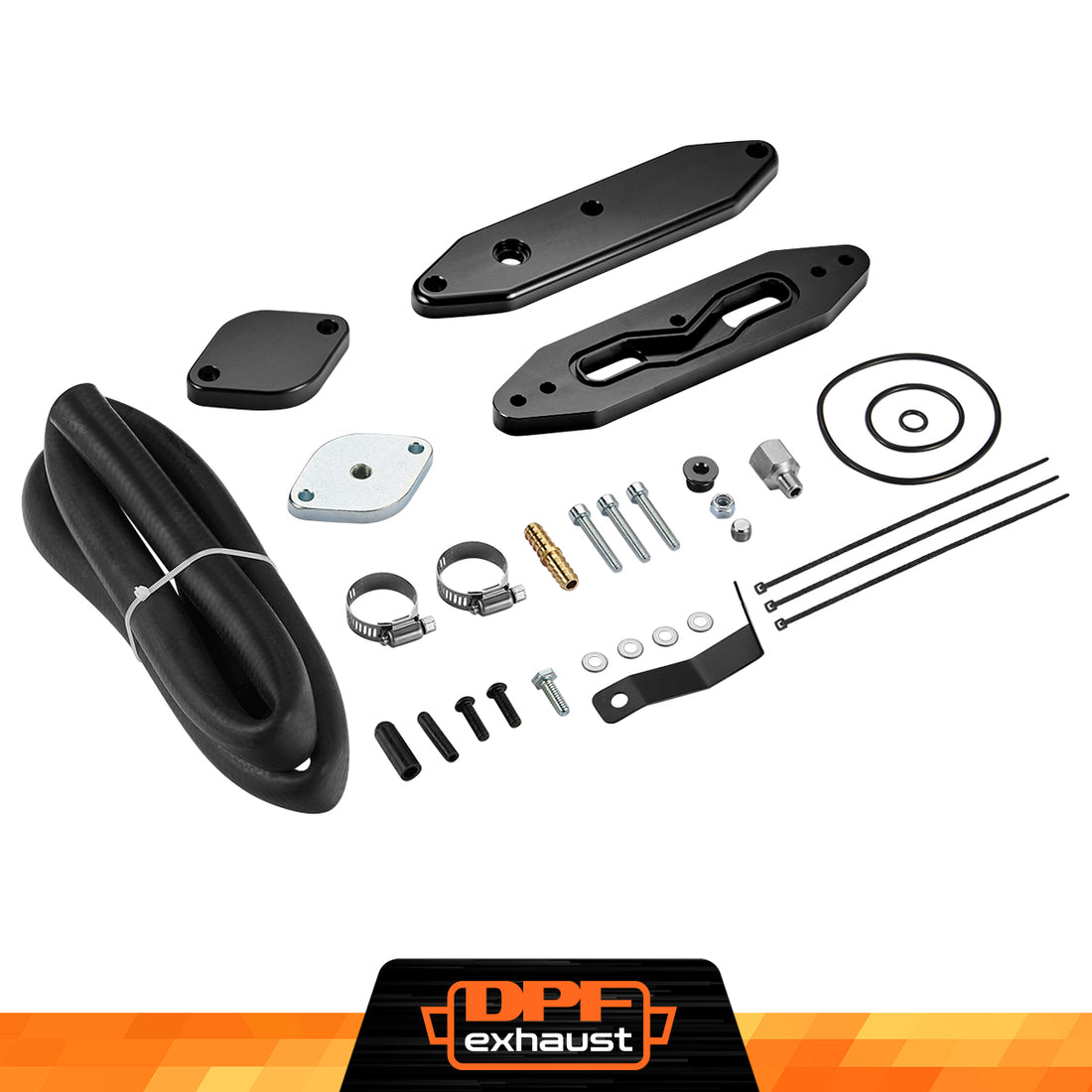
Removing the system entirely requires both hardware (to bypass the cooler) and software (to stop the ECU from looking for it).
-
EGR Delete Kit (Hardware): $100 – $250 (Includes block-off plates and coolant re-route).
-
Tuner & Tunes (Software): $800 – $1,200 (Required to prevent Check Engine Lights).
-
Labor: $400 – $600 (Simpler than replacement, but requires care).
-
Total Estimated Cost: $1,300 – $2,050
-
The Reward: You never have to spend a dime on the EGR system again. No more soot entering the intake, no more coolant leaks, and cleaner oil.
4. Why the "Delete" ROI Wins
While the Delete option has a higher upfront cost (due to the requirement of a Tuner), the Return on Investment (ROI) is superior for long-term owners.
-
Engine Longevity: By stopping hot, dirty exhaust soot from re-entering your intake, your oil stays cleaner longer, and your engine runs cooler.
-
Eliminate Failure Points: You are removing a component that will fail. It’s peace of mind.
-
Fuel Economy: Most owners report a modest MPG gain because the engine is breathing fresh oxygen rather than recycled exhaust.
Final Recommendation
If you live in an area where emissions modifications are restricted, you are stuck with Option A.
However, for competition trucks, farm vehicles, or off-road rigs, Option B (The Delete) is the only logical financial choice. Why pay $1,500 to install a part that might crack and destroy your engine, when you can pay slightly more to remove the threat forever?
👉 [Shop Our Complete 6.7 Powerstroke EGR Delete Kits] (Hardware + Tuner Bundles Available)
Improved Fuel Economy and Engine Longevity, reduced Engine Temperature
Upgrade Your 6.7 Powerstroke

