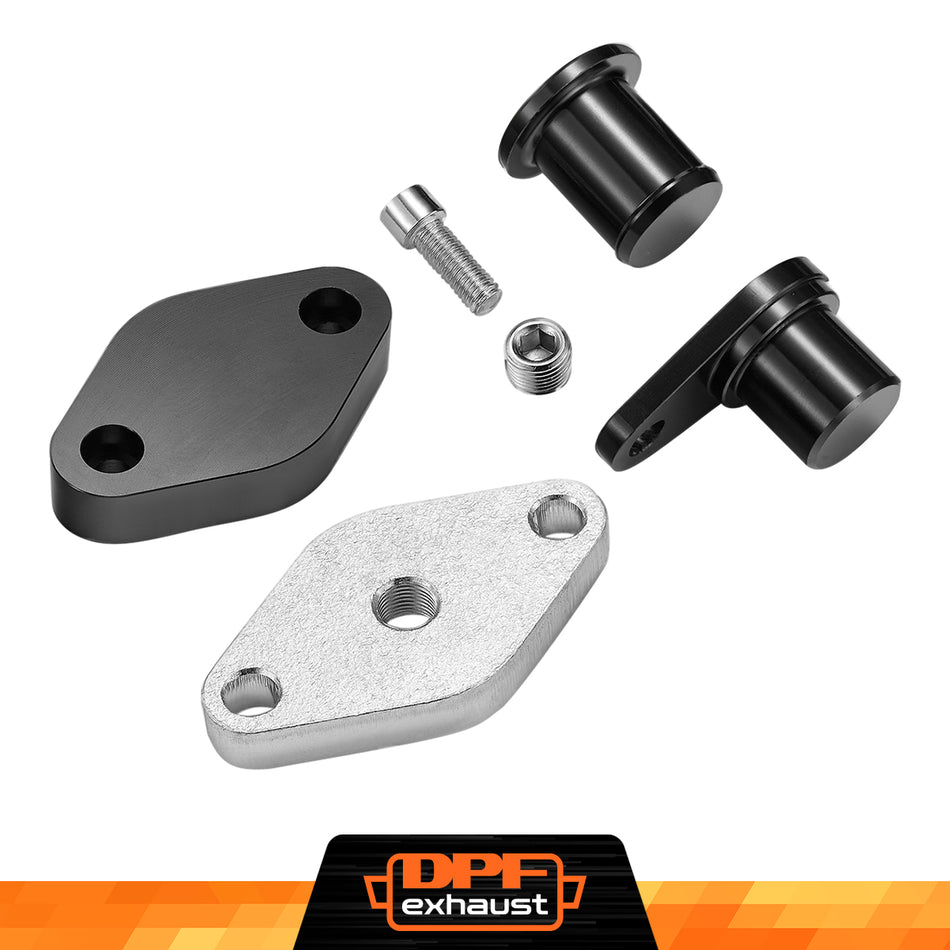
6.7 Powerstroke EGR Delete Kit:
Stop Coolant Leaks & Carbon Buildup for Good
Ford's 6.7L Powerstroke carried the EGR system into a new generation — and while the dual-circuit design was a genuine step forward from the 6.4L, owners on forums and Facebook groups still report EGR cooler failures, unexplained coolant loss, and carbon-clogged intake systems. This guide covers what the community sees, what fixing solutions exist, and how the alternative delete route gives you an exit from the cycle.
Part 1
How the 6.7L Powerstroke EGR System Differs from the 6.4L That Came Before
Ford took the lessons from 6.4L Powerstroke's emissions nightmare and redesigned the EGR system for 6.7L. The results were meaningfully better.
| Engine | EGR Cooler Design | Cooling Strategy | Known Vulnerabilities |
|---|---|---|---|
|
6.4L Powerstroke 2008–2010 |
Dual-pass EGR cooler, larger bore than 6.0L, but still prone to soot clogging under heavy DPF-regeneration cycles | Single coolant loop | EGR cooler clogging, P0401 codes, DPF-regen EGT spikes damaging cooler welds. Common at 80K–120K miles. |
|
6.7L Powerstroke 2011–2025 |
Split-circuit EGR cooler — coolant runs through two independent loops simultaneously to reduce thermal stress and carbon coking | Dual-circuit: primary engine coolant + secondary accessory coolant loop | Coolant consumption via EGR cooler at 130K–160K miles; cracked cylinder heads (2011–2012); carbon valve seizure on trucks driven with frequent short trips |
The 6.7L made real progress: its dual-circuit cooler keeps EGR gas temperatures lower and cuts carbon coking vs. the 6.4L. But routing hot exhaust through a coolant-filled exchanger still creates failure modes at high mileage — especially on heavy-duty, towing, and high-idle trucks. For most owners, the question isn't if, it's when.
Part 2
Top 3 6.7L Powerstroke EGR Problems Owners Actually Report
Search any Ford diesel forum, Facebook group, or Reddit thread for "6.7 Powerstroke EGR" and the same three issues surface again and again — from owners who expected better from the newest Powerstroke generation.
Unexplained Coolant Loss at High Mileage
6.7L trucks — especially heavy-duty, towing, and high-idle rigs — show slow coolant loss with no visible leaks. Diagnosis eventually points to the dual-circuit EGR cooler: internal passages corrode or develop cracks, bleeding coolant into the exhaust gas stream. Ford service bulletins reference this appearing most often at 130,000–160,000 miles on work trucks and fleet vehicles.
"Truck ate a quart every 500 miles. No external leak anywhere. Pulled the EGR cooler and found internal corrosion through the coolant passage. Ford calls it a known issue on '11–'12 build dates." — Powerstroke.org member, 2015 F-350
Carbon Clogging on Short-Trip and Low-Load Trucks
For fleet trucks, delivery vehicles, and daily drivers running mostly short trips, the 6.7L's EGR valve and intake ports accumulate carbon deposits faster than Ford's engineering models predicted. A clogged valve triggers P0401 (insufficient EGR flow) and P0402 (excessive flow) codes. In severe cases, carbon buildup causes the valve to physically bind and stay partially open — rough idle, black smoke, and a check engine light that no amount of highway driving clears.
"My '16 F-250 never tows, just daily commute. P0401 since 40K miles. Dealer wants $800 for a new EGR valve. Forum guys say it'll carbon up again in a year." — Reddit r/Diesel
Early Cracked Cylinder Heads on 2011–2012 Models
Shop reports and forum threads document cracked cylinder heads on early 6.7L production trucks — specifically the passenger side — traceable to prolonged EGR cooler coolant intrusion. As coolant bleeds into the exhaust stream over time, thermal effects and coolant chemistry degrade head gasket integrity on 2011–2012 models with early-production head designs. Several machine shops have confirmed cracked heads on trucks with no prior overheating events — the only common factor: a history of EGR-cooler-related coolant loss.
"We've done four 2011–2012 head replacements this year — cracked on the EGR exhaust side. Every one of those trucks had a history of coolant consumption the owner called 'normal.'" — Diesel performance shop tech, Ford Truck Enthusiasts
Part 3
Addressing 6.7L Powerstroke EGR Problems Without Modifying OE EGR System
Not every owner wants to modify their truck's emissions equipment — and for those committed to the stock configuration, there are proven, effective maintenance paths. Here's what actually works when you keep the OE EGR system in place.
EGR Cooler Replacement
Direct OE cooler replacement addresses the root cause when coolant intrusion is confirmed. On the 6.7L, the cooler is accessible from the top of the engine bay. Most shops recommend replacing coolant hoses and seals at the same time, since they show age-related degradation alongside the cooler. After replacement, coolant consumption stops and the dual-circuit system resumes normal operation.
Cooling System Flush & Secondary Loop Service
The 6.7L's secondary accessory cooling loop (mounted above the valve cover) operates at lower pressure and is prone to air pockets and flow restrictions. A proper coolant flush — using Ford-approved spec and a reverse-flush on the secondary loop — restores proper EGR cooler temperatures and reduces carbon coking risk. Annual coolant replacement at Ford intervals is the single best preventive step for 6.7L EGR longevity.
EGR Valve Cleaning & Intake Port Decarbonization
For P0401 and P0402 codes caused by carbon buildup rather than coolant intrusion, thorough valve and intake port cleaning restores proper flow. On the 6.7L, this involves removing the EGR cooler assembly and using a solvent clean + sea-foam intake treatment. For short-trip trucks, cleaning every 30,000–50,000 miles as scheduled maintenance is a realistic, cost-effective way to manage carbon buildup without modifying the emissions system.
Part 4
The EGR Block-Off Plate Kit for 6.7 Powerstroke — Price from $81.00
For owners who've weighed ongoing maintenance costs against a one-time fix and decided to close the 6.7L EGR chapter, DPFexhaust.com offers a precision-engineered egr delete kit 6.7 powerstroke that replaces the factory EGR system completely — no recurring maintenance, no check engine light from EGR fault codes.
EGR Delete Kit — 2011–2025 Ford F250 / F350 / F450 / F550 6.7L Powerstroke
- CNC-machined billet aluminum EGR block-off / coolant bypass plate
- Stainless steel exhaust cover plate — tapped for Ford factory EGT probe
- All required mounting hardware for your specific model year
- 2015–2016 kits include one additional filter tube
- Online installation guides: dpfexhaust.com/pages/dpfexhaust-instruction-guide
Note: Removing the factory EGR system may trigger a check engine light on stock Ford calibrations. A compatible diesel tuner (sold separately) clears emissions fault codes and optimizes the engine calibration for the delete configuration — maximizing both performance and fuel economy gains from your 6.7 Ford EGR delete.