If your diesel truck suddenly starts doing regens much more often, it is easy to blame the DPF. But the filter may only be catching the extra soot made by a problem somewhere else in the engine.
An EGR problem is one possible cause.
A stuck EGR valve, blocked cooler, bad sensor, or airflow problem can change how much fresh air reaches the cylinders. If combustion gets worse, the engine may make more soot.
The DPF then has to catch that extra soot.
This is why cleaning or replacing the DPF may not fix the problem if the real cause is still there. The filter can fill up again, and frequent regen may return.
How Do the EGR and DPF Systems Work Together?
The EGR and DPF systems do different jobs, but they affect each other.
The EGR system sends a controlled amount of exhaust gas back into the intake. This helps the engine control combustion temperature and emissions.
The DPF sits farther down the exhaust system. Its job is to catch soot before it leaves the tailpipe.
In simple terms:
- The EGR system can change how the engine burns fuel.
- The DPF catches the soot made during combustion.

If an EGR or airflow problem causes the engine to make more soot, the DPF reaches its soot limit sooner.
The truck may then start active regeneration more often to burn that soot away.
That means a DPF that keeps filling is not always a bad DPF.
Soot and Ash Are Not the Same Thing
It also helps to understand the difference between soot and ash.
Soot can usually be burned during a successful regen.
Ash cannot.

Ash slowly builds inside the DPF over time. Normal regeneration does not remove it.
So before replacing a filter, check whether the problem is soot, ash, a bad pressure reading, or actual damage inside the DPF.
Why Can an EGR Problem Make the DPF Fill Faster?
A diesel engine needs the right mix of fresh air, EGR flow, boost, and fuel.
If that balance is wrong, the engine may not burn the fuel as cleanly as it should.
That can create more soot.
The basic chain looks like this:
EGR or airflow problem → poor air control → more soot → faster DPF loading → more frequent regen.
But this does not happen with every EGR fault.
The ECM may try to correct the problem by changing turbo position, throttle position, fuel delivery, boost, or airflow.
That is why an EGR code by itself does not prove that the EGR system is making the DPF fill faster.
4 EGR Problems That Can Increase DPF Loading
1. EGR Valve Stuck Open
If the EGR valve stays open when it should close, too much exhaust gas can enter the intake.
That exhaust gas takes the place of some fresh air. Under the wrong conditions, the engine may not get enough oxygen for clean combustion.
Soot can increase as a result.
Possible signs include:
- Rough idle
- Slow throttle response
- Hesitation
- Surging
- Smoke
- Weak low-rpm power
- Poor towing response
- More frequent DPF regen
An EGR valve can also work normally when cold and start sticking after the engine gets hot.
For that reason, a quick visual check may not tell the full story.
If your scan tool supports it, compare the commanded EGR position with the actual EGR position.
2. EGR Valve Stuck Closed or EGR Flow Too Low
A stuck-closed EGR valve is not as simple.
Low EGR flow does not always create more soot.
The ECM may try to make up for low EGR flow by changing:
- Turbo vane position
- Throttle position
- Fuel delivery
- Boost target
- Airflow target
What happens next depends on the engine, load, temperature, and exact fault.
So do not use a simple rule like “closed EGR means clogged DPF.”
If you have a P0401 code, test the whole EGR flow system before replacing the valve.
This guide to P0401 EGR flow problems explains why the valve is not always the failed part.
3. Blocked EGR Cooler or EGR Passages
Carbon can slowly build inside the EGR cooler and its passages.
The ECM may ask for a certain amount of EGR flow, but a blocked passage may keep that amount from reaching the engine.
The blockage may be inside:
- The EGR cooler
- An intake passage
- An EGR crossover
- A mixing passage
- Another EGR flow path
The passage does not have to be fully blocked. Heavy buildup can also make the flow uneven.

Pay close attention if the truck is also losing coolant.
Possible warning signs include:
- Coolant level dropping for no clear reason
- White vapor
- Steam
- A sweet smell from the exhaust
- Coolant reservoir level going down
Do not treat these signs as a normal soot problem. Find the cause before towing or putting the truck under heavy load.
4. Bad EGR Sensor, Actuator, or Airflow Reading
The EGR system depends on more than the valve.
The ECM uses several sensors to decide if EGR flow is working as expected.
Problems can include:
- A dirty MAF sensor
- A bad exhaust-pressure reading
- A failed EGR position sensor
- A bad EGR actuator
- Loose or dirty electrical connectors
- Damaged wiring
- A power or ground problem
A bad sensor can make the ECM think EGR flow is wrong even when the valve itself is still working.
Replacing the valve only because of an EGR flow code can become an expensive guess.
Do Not Forget the DPF Differential-Pressure Sensor
Sometimes the truck looks like it has a clogged DPF when the real problem is the pressure sensor or its tubes.
The DPF differential-pressure sensor checks the pressure before and after the filter.
The ECM uses that information to help judge how restricted the DPF is.
Possible problems include:
- Blocked pressure tubes
- Soot inside the tubes
- Water or condensation
- Cracked hoses
- Hoses connected the wrong way
- A bad pressure sensor
- Wiring problems

A wrong pressure reading can make the DPF look more clogged than it really is.
Before buying a costly new filter, check the tubes and make sure the sensor reading makes sense with the engine off and running.
The EGR-to-DPF Soot Chain
When an EGR problem really is causing faster DPF loading, the pattern often looks like this:
EGR problem → airflow is wrong → combustion gets worse → the engine makes more soot → the DPF catches more soot → regen happens sooner.
Still, EGR is only one possible cause.
Frequent regen can also be linked to:
- Injector problems
- Boost leaks
- Charge-air leaks
- Turbo control problems
- Exhaust leaks before the turbo
- Thermostat problems
- Low engine temperature
- Oil consumption
- Short trips
- Long idle time
- Bad temperature readings
- Wrong DPF pressure readings
Carbon buildup inside the intake also shows how EGR flow and crankcase oil vapor can mix over time.
This guide to EGR-related intake soot accumulation shows how this can happen on an older Duramax.
Do not overlook the charge-air system either.
A split boot, loose clamp, cracked intercooler, or other boost leak that contributes to frequent DPF regeneration can feel a lot like an EGR problem.
Signs of an EGR-Related DPF Problem
No single symptom proves that the EGR system is causing the problem.
But several signs together can point you in that direction:
- P0401, P0402, P0404, or other EGR codes
- Rough idle
- Hesitation or surging
- Weak throttle response
- Commanded and actual EGR positions do not match
- MAF does not change as expected when EGR moves
- Shorter time or mileage between regens
- Higher DPF differential pressure
- Worse fuel economy
- More smoke under load
- A new exhaust smell
- Coolant loss or white vapor
Track the Miles Between Regens
One of the easiest things a truck owner can do is record the mileage between regeneration events.
Saying “it regens all the time” does not give you much to work with.
Knowing that the truck used to go much farther between regens gives you a useful pattern.
Also watch fuel economy.
A pattern where fuel economy drops before the DPF warning light may be an early sign that the engine is making more soot or doing more regens.
What Scan-Tool Data Should You Check?
A scan tool is most useful when you compare several readings together.
Useful data may include:
- EGR commanded position or flow
- Actual EGR position
- MAF
- MAP or boost
- Exhaust pressure
- Coolant temperature
- DPF differential pressure
- Calculated DPF soot load
- Calculated ash value, if supported
- Exhaust gas temperature
- Regen status
- Distance or time since the last regen
Compare the numbers with service information for your exact engine and model year.
A normal number on one truck may not be normal on another.
Also save freeze-frame data before clearing codes.
It can show engine speed, load, temperature, airflow, boost, and vehicle speed when the fault happened.
That may tell you if the problem happened at idle, during acceleration, on the highway, or while towing.
Look at How the Readings Work Together
One scan-tool number rarely tells the whole story.
Ask questions like:
- Does actual EGR position follow the commanded position?
- Does MAF change when the EGR valve moves?
- Does boost rise normally under load?
- Does exhaust pressure make sense for the load and rpm?
- Does DPF pressure rise as exhaust flow increases?
- Does the engine reach normal operating temperature?
- Does coolant temperature stay steady on the highway?
- Does the truck finish regen normally?
These relationships often tell you more than one number by itself.

A Simple Diagnosis-First Repair Order
If the DPF keeps filling and you think the EGR system may be involved, work through the problem in order.
- Save the codes and data. Record trouble codes, freeze-frame data, regen history, recent repairs, and symptoms before clearing anything.
- Check engine temperature. Make sure the engine reaches and holds its normal operating temperature.
- Check the simple things first. Look at wiring, connectors, hoses, intake pipes, charge-air boots, and coolant lines where needed.
- Compare EGR command and actual position. Also watch MAF, boost, and exhaust pressure.
- Check the DPF pressure sensor and tubes. Make sure the pressure reading makes sense.
- Look for other causes of high soot. Check for boost leaks, exhaust leaks, injector problems, turbo problems, and thermostat problems.
- Fix the real cause. Repair the EGR, airflow, fuel, temperature, sensor, or wiring problem you confirmed.
- Check the DPF after the repair. Review soot load, ash load, pressure, regen history, and filter condition.
- Use the right DPF service method. Only use the regen, cleaning, or repair process allowed for that truck and its condition.
Injector problems are also worth checking if the filter keeps filling after EGR work.
An injector that adds too much fuel or has a poor spray pattern can make much more soot.
This guide to injector problems that repeatedly clog a DPF explains why the filter may keep loading even after other repairs.
Oil consumption is another separate issue.
Oil can leave ash that normal regen cannot burn away. That is why excessive oil consumption can shorten DPF life even if the EGR system is working correctly.
Why Cleaning the DPF Alone May Not Fix It
This is how many repeat DPF repairs happen.
The engine has an EGR, injector, boost, or temperature problem.
That problem makes too much soot.
The DPF fills up.
The filter gets cleaned.
But the engine problem stays.
The engine keeps making too much soot, and the cleaned DPF fills again.
The owner may then think the cleaning failed or the DPF is bad.
But the filter may simply be doing its job.
Fix the problem that is making the extra soot first. Then decide what the DPF needs.
When Is a Forced Regen the Wrong First Step?
A forced regen should not replace proper diagnosis.
If the engine is adding too much fuel, losing coolant, getting the wrong amount of air, or sending too much oil into the exhaust, raising exhaust temperature may add risk without fixing the cause.
Before doing a forced or parked regen, make sure:
- The DPF soot load is within the allowed range
- There are no faults that prevent a safe regen
- The engine is not adding too much fuel
- Too much oil is not entering the exhaust
- There is no active coolant leak
- Temperature and pressure readings make sense
- The service procedure allows the regen
If DPF differential pressure stays high after a successful approved regen, the filter may have too much ash or internal damage.
It may also need professional off-truck cleaning or replacement.
What If the DPF Still Fills Fast After the EGR Repair?
If you fix a confirmed EGR problem but regen is still happening too often, check the rest of the system.
Other possible causes include:
- Injector or fueling problems
- Charge-air leaks
- Turbo control problems
- Exhaust leaks before the turbo
- A bad thermostat
- A bad coolant-temperature reading
- Bad exhaust-temperature sensors
- DPF pressure sensor or tube problems
- High oil consumption
- Heavy DPF ash buildup
- Damage inside the DPF
- Too many short trips
A high-mileage DPF can also have a lot of ash even after the engine problem is fixed.
A successful regen may remove fresh soot, but it will not remove that ash.
Repair and System Options
For a road-going emissions-controlled diesel truck, start with proper diagnosis.
Repair or replace the parts that testing shows are bad. Apply any needed software updates and use the approved DPF service process.
After the repair, watch the regen interval and scan data again.
Do not assume the truck is fixed only because the warning light turned off.
If regen returns to a normal pattern, that is a much better sign that the real cause was repaired.
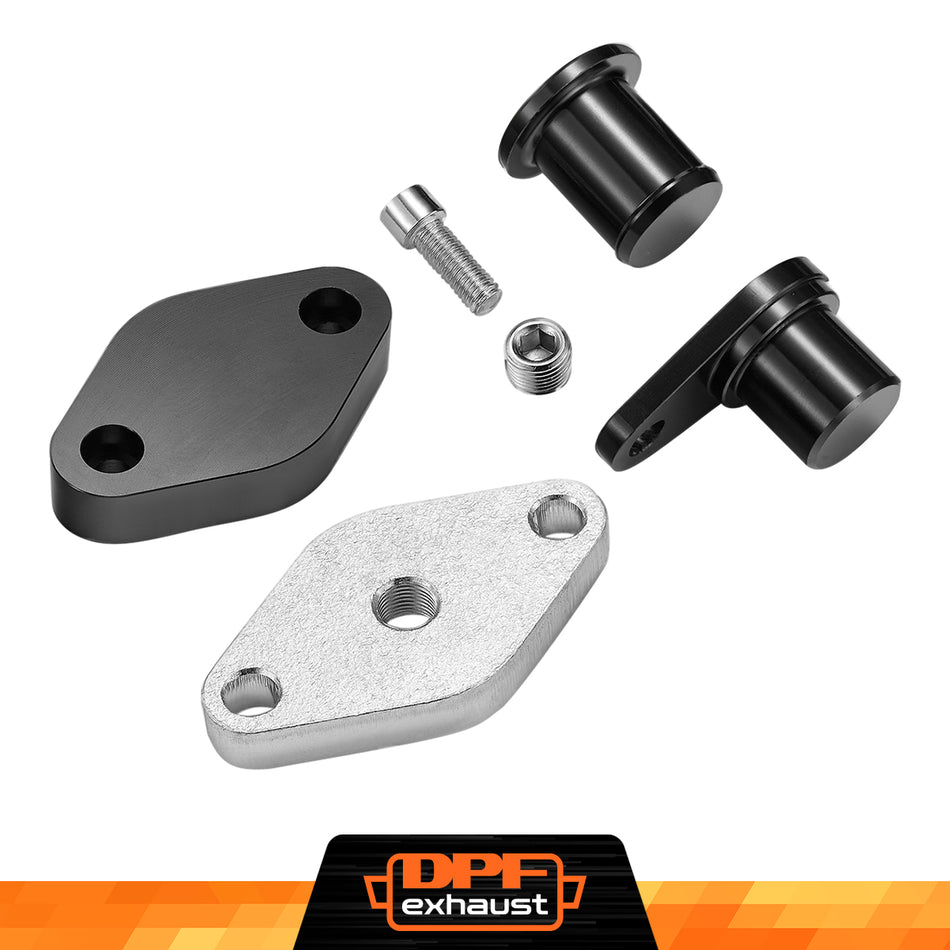
Hardware involving removal, bypassing, or disabling emissions controls is not a substitute for repairing a road-going truck. For legally eligible off-road, competition, race, or export-only applications, owners researching application-specific hardware can compare general off-road EGR system options and combined off-road DPF and EGR kits, subject to the compliance limits below.
Platform-specific research should remain within the correct engine family. Legally eligible non-road builds can compare Powerstroke EGR options, 6.7 Cummins EGR options, or Duramax EGR options. Confirm the engine code, model year, cab-and-chassis status, and intended legal use before comparing components.
Compliance note: Removing, bypassing, or disabling emissions controls can violate federal and local law. Hardware marketed for competition or non-road applications may be used only where the intended vehicle and use are legally eligible. A label or disclaimer does not override the law.
FAQ
Q: Does P0401 mean the DPF is clogged?
A: No. P0401 points to low EGR flow or a problem with how the flow is being measured. The DPF still needs its own checks for soot, ash, pressure, and damage.
Q: Can an EGR valve stuck open cause frequent DPF regen?
A: Yes. Too much EGR can reduce the fresh air available for clean combustion. That can make more soot and cause the DPF to reach its regen point sooner.
Q: Can an EGR valve stuck closed make the DPF fill faster?
A: It can in some cases, but not always. The ECM may change boost, throttle, fuel, and airflow to make up for low EGR flow. Check scan data before blaming the DPF.
Q: Can DPF regeneration clean the EGR valve?
A: No. DPF regen burns soot inside the filter. It does not fix a stuck EGR valve, blocked cooler, bad actuator, damaged wiring, or blocked EGR passage.
Q: Why did my DPF fill up again after it was cleaned?
A: The engine may still be making too much soot. EGR faults, bad injectors, boost leaks, thermostat problems, oil use, exhaust leaks, or bad sensors can make a cleaned DPF fill again.
Q: Can a bad EGR cooler cause DPF problems?
A: Yes, a blocked EGR cooler can upset EGR flow and may lead to more soot. Coolant loss, white vapor, steam, or a sweet smell can also point to an EGR cooler problem.
Q: Can a bad DPF pressure sensor make the filter look clogged?
A: Yes. A bad sensor or blocked pressure tube can report more restriction than the filter really has. Check the sensor and tubes before replacing the DPF.
Q: Can short trips make an EGR-related DPF problem worse?
A: Yes. Short trips may end before regen can finish. If an EGR problem is also making more soot, the DPF can fill even faster.
Q: Should I replace the DPF before fixing the EGR problem?
A: Usually not. Fix the confirmed EGR or airflow problem first unless testing shows the DPF is damaged or cannot be cleaned. Otherwise, the new filter may fill again.
Q: Will highway driving fix an EGR problem?
A: No. Highway driving may help a healthy truck finish regen, but it cannot fix a stuck EGR valve, blocked cooler, bad sensor, wiring problem, coolant leak, or damaged actuator.