

2011-2016 LML Duramax EGR Delete Kit Guide
DPFexhaust Team | June 2026 | 7 min read
What the EGR (Exhaust Gas Recirculation) System Does on Your LML Duramax
The EGR system on your lml duramax engine routes a measured amount of exhaust gas back into the intake manifold to reduce peak combustion temperatures and lower nitrogen oxide (NOx) emissions. On the 2011-2016 LML platform, exhaust passes through an EGR cooler (which uses engine coolant to bring exhaust temperatures down before recirculation), then through the EGR valve itself, and finally into the intake mixing chamber upstream of the turbocharger compressor wheel.
The EGR system design introduces soot-laden exhaust directly into the intake air stream, where carbon accumulates over time on intake ports and valves. The cooler is also a known weak point -- its internal tubes endure extreme temperature cycling between hot exhaust gas and engine coolant, which can lead to cracking and internal coolant leaks if not properly maintained.
Most Discussed EGR Topics Across LML Duramax Model Years
The following discussions represent the most frequently cited EGR-related issues among owners of the two LML production periods -- early 2011-2015 and late 2015.5-2016.
EGR Cooler Coolant Leak and White Smoke (2011-2015 LML)
The single most active topic for 2011-2015 lml egr delete discussions centers on EGR cooler rupture symptoms. Owners report noticing thick white steam from the tailpipe that smells sweet, accompanied by unexplained coolant loss from the overflow tank with no visible external leak. The consensus across threads is that these symptoms indicate a cracked or ruptured EGR cooler allowing coolant to enter the exhaust stream -- a problem that leads to coolant contamination of the VGT turbo and potentially catastrophic damage.
"Started seeing white smoke out the tailpipe on cold starts last month. Thought it was just condensation at first but then noticed my coolant level dropping about half a quart every few days with no puddles under the truck. Took it in and they said the EGR cooler is leaking internally. Quoted me over $1200 to replace it." -- DuramaxForum.com, 2013 Silverado 2500HD LML owner
"Lost my turbo because of a leaking EGR cooler. Coolant got past the seal, mixed with soot, and gummed up the VGT vanes. By the time I figured it out the turbo was basically locked up. If you see white smoke do not keep driving it." -- Reddit r/Duramax, 2014 Sierra 2500HD LML owner
Discussion 2 -- Repeated P0401 Codes and Carbon Buildup (2015.5--2016 LML)
For the 2015.5-2016 cohort (often called the "late" LML run), the most common discussion involves recurring P0401 (EGR Flow Insufficient) trouble codes combined with rough idle after extended highway towing. The 2015.5-2016 models received a slightly revised EGR valve calibration from GM, but multiple owners report that this did not resolve underlying carbon accumulation issues in the EGR passages, leading to repeated shop visits and valve cleaning cycles.
"My '15.5 has thrown P0401 three times in 40k miles. Each time the dealer cleans the EGR valve and clears the code, then it comes back after another long tow. They told me the passage keeps clogging with carbon from the recirculated exhaust. Starting to think about deleting the whole thing before it causes something worse." -- Facebook Chevy/GMC Duramax Diesel group, 2015.5 Silverado 2500HD LML owner
"Had the same P0401 loop on my '16 LML. Cleaned the EGR valve myself twice -- both times it was packed solid with black carbon crud right at the inlet where the cooler dumps into the intake. The design just feeds soot straight back in there is no way around it unless you delete it or accept cleaning it every 20k." -- DuramaxForum.com, 2016 Sierra 3500HD LML owner
Maintaining Your Stock LML EGR System Without Deleting It
If you want to keep your factory EGR system intact and minimize the issues discussed above through proper care, the following steps address the root causes of most stock-system complaints without removal or modification.
Step 1: Clean the EGR Valve Every 25,000--30,000 Miles
Remove the two-bolt EGR valve assembly from the top of the engine and inspect the pintle and seat area for carbon buildup. Clean thoroughly with quality intake cleaner and soft brush until the metal surfaces are visible and the valve moves freely through its full range of motion. A sticking EGR valve is the most common trigger for P0401 codes on the LML platform. This task takes roughly 30 minutes with basic hand tools and requires no special equipment beyond the cleaner and a socket set.
Step 2: Flush the EGR Cooler Passages During Every Coolant Service
When you perform your scheduled coolant flush (typically every 50,000 miles using DEX-COOL), take an extra 15 minutes to flush fresh water through the disconnected EGR cooler lines before reconnecting them. This dislodges accumulated sediment and particulate matter from inside the cooler tubes, which would otherwise reduce heat transfer efficiency and contribute to localized hot spots that accelerate thermal stress on the thin tube walls. Use low-pressure water only -- high pressure can damage the internal structure.
Step 3: Monitor Coolant Level Weekly and Check for White Steam at Cold Start
The earliest warning sign of a developing EGR cooler leak is gradual coolant loss with no external evidence. Check your overflow tank level once a week and note any downward trend. Also observe your tailpipe during cold starts -- if you see thick white steam that persists longer than 30 seconds after startup and has a sweet odor, that indicates coolant entering the exhaust stream through a compromised cooler. Catching a small weep early prevents the much larger repair that results from continued driving with a fully ruptured unit.
Step 4: Avoid Excessive Idling and Allow Proper Cool-Down After Towing
Extended idle periods cause incomplete combustion that produces wet, oily soot deposits. Those deposits accumulate inside the EGR cooler and intake passages far faster than soot generated during loaded driving conditions. If your work requires frequent idling, consider a brief highway run once or twice per week to burn off accumulated deposits through higher exhaust temperatures. Additionally, allow your truck to idle for 2--3 minutes after a heavy towing run before shutting down -- this lets the EGR cooler temperatures stabilize gradually rather than locking maximum thermal stress into the unit during an abrupt shutdown.
These four steps form a practical maintenance routine that significantly reduces the likelihood of both P0401 codes from carbon-clogged passages and catastrophic cooler failures from neglected thermal stress. The approach preserves your factory emissions configuration while addressing the specific failure modes that affect the duramax lml egr delete kit discussion community most heavily.
LML Duramax EGR Delete Kit Available at DPFexhaust.com
For owners who have decided that maintaining the factory EGR system is no longer the right fit for their use case, we offer lml egr delete kit for you. This kit completely removes the factory EGR valve and EGR cooler assembly, replaces them with precision-machined block-off plates, and reroutes coolant flow to maintain a closed cooling circuit.
EGR Delete Kit for LML 2011-2016 GMC Chevy 6.6L Duramax Diesel
Chevy Silverado / GMC Sierra 2500HD & 3500HD 6.6L LML Duramax (2011--2016)
*Not compatible with Cab & Chassis models
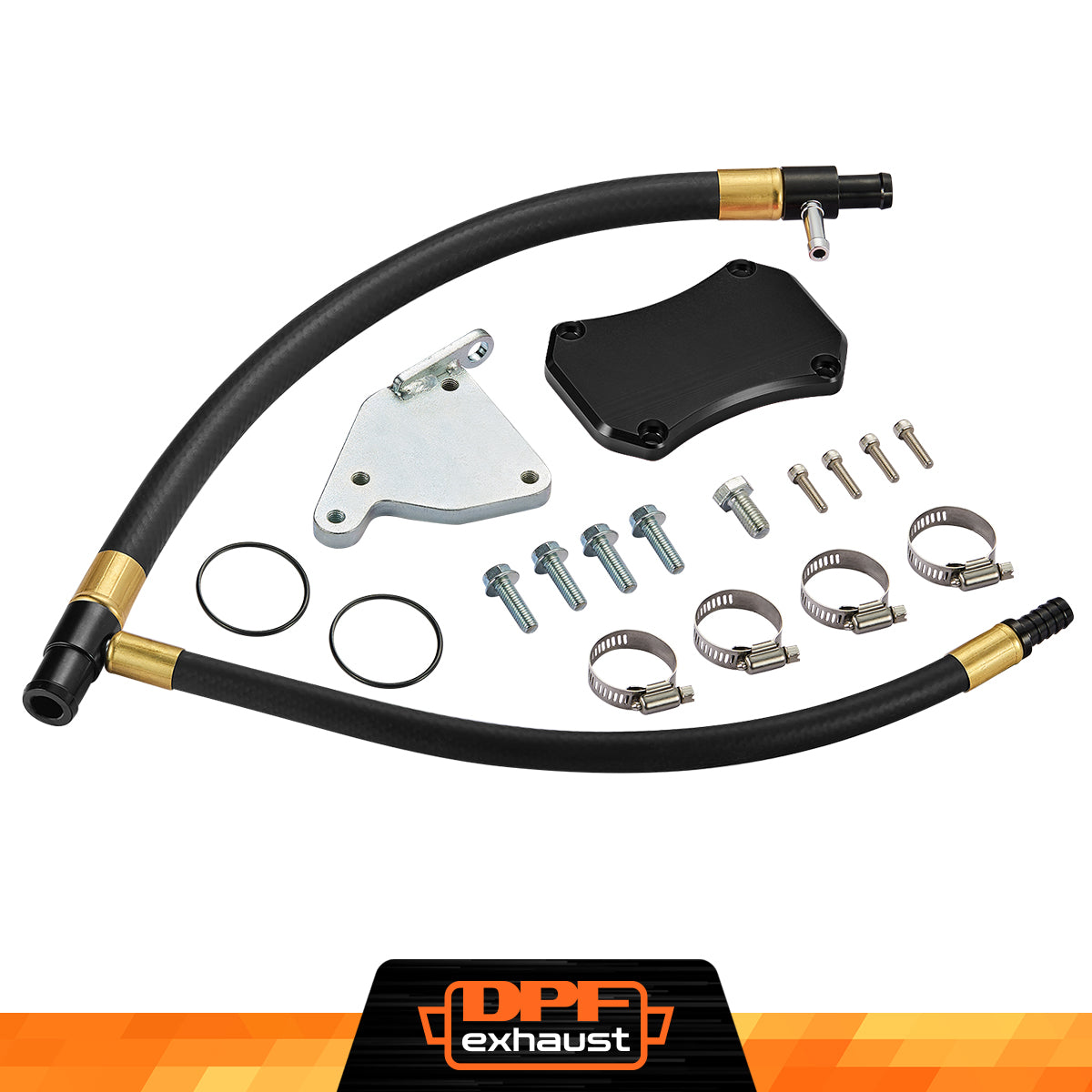
- Available in black, red, or silver color
- Aviation-grade aluminum alloy block-off plates and stainless steel hardware
- Integrated coolant bypass to maintain proper cooling circuit operation after the EGR cooler is removed, preventing coolant loss and preserving correct thermal management
- Bolt-on installation requires approximately 6 to 8 hours with standard hand tools -- no intake manifold removal necessary, making this one of the more accessible duramax lml egr delete kit options available for DIY installers.
- Check installation guide for 2011-2016 LML Duramax EGR Delete Kit
Custom ECU tuning is required before driving to prevent check-engine lights and limp mode activation. Compatible tuning platforms include Mini Maxx V2, EFILive AutoCal V3, and EZ Lynk.
For questions about tuner compatibility, fitment verification for your specific production date, or installation guidance, contact service@dpfexhaust.com before ordering -- the team typically responds within 24 hours.


