

6.4 Powerstroke DPF DEF EGR Delete Kit Guide
DPFexhaust Team | June 2026 | 7 min read
DPF, DEF, and DPF Systems on Your 6.4 Powerstroke
The 6.4 Powerstroke engine (2008-2010 Ford Super Duty) was the first Powerstroke platform equipped with all 3 emission systems, so what do those parts actually do on your 6.4 Powerstroke?
- EGR (Exhaust Gas Recirculation): Routes a portion of exhaust gas through dual EGR coolers back into the intake to lower combustion temperatures and reduce NOx emissions. The 6.4L uses two separate coolers (one per cylinder bank), which doubles the potential leak points compared to single-cooler designs.
- DPF (Diesel Particulate Filter): A ceramic filter in the exhaust stream that traps soot particles. The truck periodically enters "regeneration" mode, injecting extra fuel to raise exhaust temperature and burn off accumulated soot inside the filter.
- DEF (Diesel Exhaust Fluid): Injected upstream of the selective catalytic reduction (SCR) catalyst to convert remaining NOx into nitrogen and water vapor. While the 6.4L platform uses a less complex DEF system than later generations, it still contributes to overall aftertreatment load and maintenance requirements.
What 6.4 Powerstroke Owners Are Saying About EGR, DPF, and DEF Issues
The following discussions represent the most frequently cited complaints among 6.4 egr delete from PowerStroke.org, Ford-Trucks.com forums, Reddit's r/Diesel community, and Facebook groups. Two distinct problem clusters dominate the conversation.
Dual EGR Cooler Leaks, White Smoke, and Silent Head Gasket Failure
The most widely reported issue across all 2008-2010 model years involves the EGR cooler design. Owners consistently report that when coolers develop internal cracks, coolant enters the exhaust stream, producing thick white smoke at cold start or under boost. A troubling pattern documented in owner reports is that head gasket failures on the 6.4L can progress silently with no obvious drivability symptoms until coolant loss becomes severe.
"90% of the problems with the 6.4 stem from the regen process. The other 10% are things like head gaskets and cracking pistons. If you're dealing with constant coolant loss and white smoke that smells sweet, check your EGR coolers first before assuming it's something worse." -- PowerStroke.org, 2009 F250 6.4L owner
DPF Regeneration Heat, Clogged Filters, and Fuel Dilution in Engine Oil
The second major discussion cluster centers on DPF-related problems. During active regeneration, late-post fuel injection raises exhaust temperatures to burn accumulated soot out of the DPF. Multiple owners report that unburned fuel from these cycles washes past piston rings into the crankcase, causing oil levels to rise over time (fuel dilution). Thinned oil loses its lubricating properties, accelerating bearing wear and reducing turbocharger life. Owners also describe repeated DPF sensor failures triggering false regeneration events that cook the filter without actually clearing soot, creating a compounding failure loop.
"My oil level keeps going UP between changes instead of down. Had it tested and it reeks of diesel fuel. Dealer said it's from the regen cycle dumping raw fuel into the cylinders. They wanted $3,200 to replace the DPF and both EGR coolers. Starting to understand why guys just delete the whole thing." -- Facebook Ford Super Duty Diesel group, 2010 F350 6.4L owner
"Early 2008 models suffered most from the emissions hardware teething pains -- radiator recalls, coolant leaks, the works. My '08 has been through two radiators and one EGR cooler already at 120k miles. By 2010 most design updates were in place, but even then you still see turbo/exhaust glitches from the heat management system working overtime during regen." -- Reddit r/Diesel, multi-year 6.4L owner
How to Maintaining Your Stock 6.4 Powerstroke Emissions Systems
Follow the steps below to make your 6.4's emission system good again!
Step 1: Check Coolant Level Weekly and Inspect for Milky Residue Under the Oil Cap
The dual EGR cooler design means there are twice as many internal coolant-to-exhaust interfaces that can fail. Monitor your degas bottle level once a week and note any downward trend with no visible external leak. Also check beneath your oil fill cap periodically -- milky, coffee-colored residue indicates coolant entering the oil system through an EGR cooler breach, and it requires immediate attention. Catching a small weep early prevents the cascading damage with coolant contamination.
Step 2: Shorten Oil Change Intervals If You Do Mostly City Driving or Frequent Short Trips
DPF regeneration requires sustained highway speed exhaust temperatures, if your driving profile is mostly city or short-trip duty, incomplete regen cycles leave excess fuel in the cylinders that washes into the crankcase. This thins your oil and accelerates wear on bearings, turbos, and rocker assemblies. Switching to a 3,000-mile oil change interval (or sooner if your oil analysis shows elevated fuel content) significantly reduces the cumulative effect of dilution on long-term engine health. Use the correct CJ-4 rated diesel oil specified for the 6.4L platform.
Step 3: Force a Highway Regeneration Run Every 1--2 Weeks
Schedule a deliberate 20--25 minute run at 55+ mph every week or two. This allows the DPF regeneration cycle to initiate and complete fully, burning off accumulated soot before it reaches levels that trigger fault codes or force the truck into reduced-power mode. Avoid shutting the engine down mid-regen if possible -- if you notice elevated idle speed or a hot exhaust smell, let the cycle finish before parking. Interrupted regens leave partially-burned soot that hardens into a cement-like deposit inside the filter matrix, making future cleanouts progressively more difficult.
Step 4: Clean Both EGR Valves when Servicing (Approximately Every 30,000 Miles)
Remove both EGR valve assemblies, inspect the pintles and seat areas for carbon buildup. Clean thoroughly with a quality intake cleaner and a soft brush until metal surfaces are visible and each valve moves freely through its full range of motion. Sticking or slow-moving EGR valves are a primary trigger for insufficient-flow trouble codes on this platform. Budget roughly 45 minutes for both sides with basic hand tools.
These four maintenance steps form a practical routine that addresses the specific failure modes affecting the 6.4 powerstroke community most heavily -- EGR cooler integrity, fuel dilution from incomplete regen cycles, DPF filter saturation, and valve carbon accumulation. Following them consistently extends the service life of your factory emissions equipment considerably.
6.4 Powerstroke EGR Delete, DPF Delete, and DPF/DEF/EGR All-in-One Delete Kits
We sell EGR delete kit, DPF delete kit, and DPF/DEF/EGR all-in-one delete kits for 2008-2010 6.4 Powerstroke Ford Super Duty trucks:
EGR Delete Kit for 2008-2010 Ford 6.4L Powerstroke Turbo Diesel
Ford F250 / F350 / F450 Super Duty 6.4L Powerstroke V8 Diesel
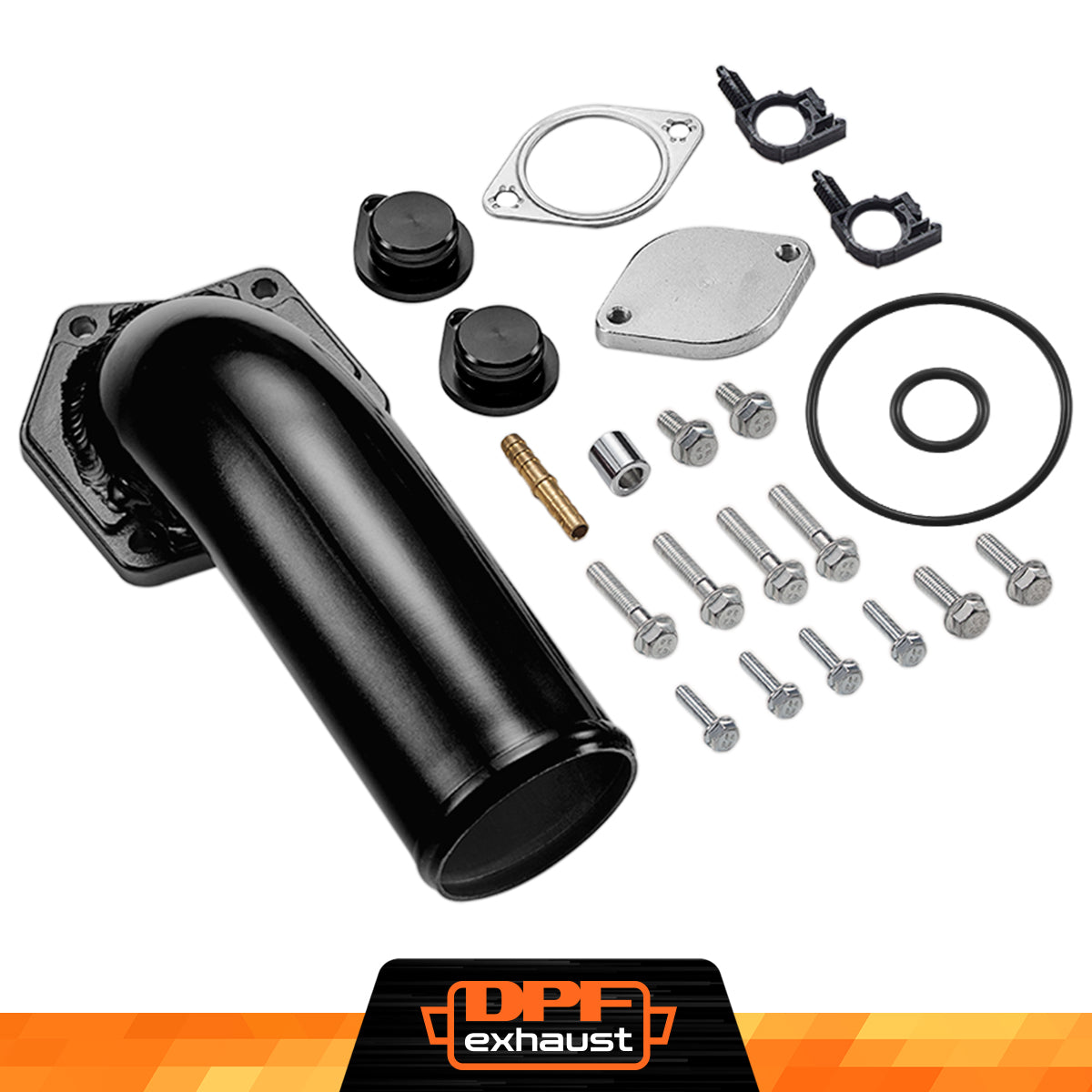
- Removes the factory EGR system with aluminum block-off plates and a high-flow polished aluminum intake elbow, delivering noticeably improved throttle response and eliminating carbon recirculation into the intake stream
- Comes with all necessary installation hardware, gaskets, and detailed instructions for a straightforward bolt-on installation that takes approximately 6 to 8 hours with standard hand tools and does not require cab removal or intake manifold disassembly
- Available in three finish options (black, red, silver) to match existing under-hood components, and compatible with all major tuning platforms including H&S Mini Maxx, EFILive AutoCal, and EZ Lynk for required ECU calibration
4''/5'' Cat & DPF Delete Race Pipe for 2008-2010 Ford 6.4L Powerstroke
Ford F250 / F350 / F450 Super Duty 6.4L Powerstroke V8 Diesel
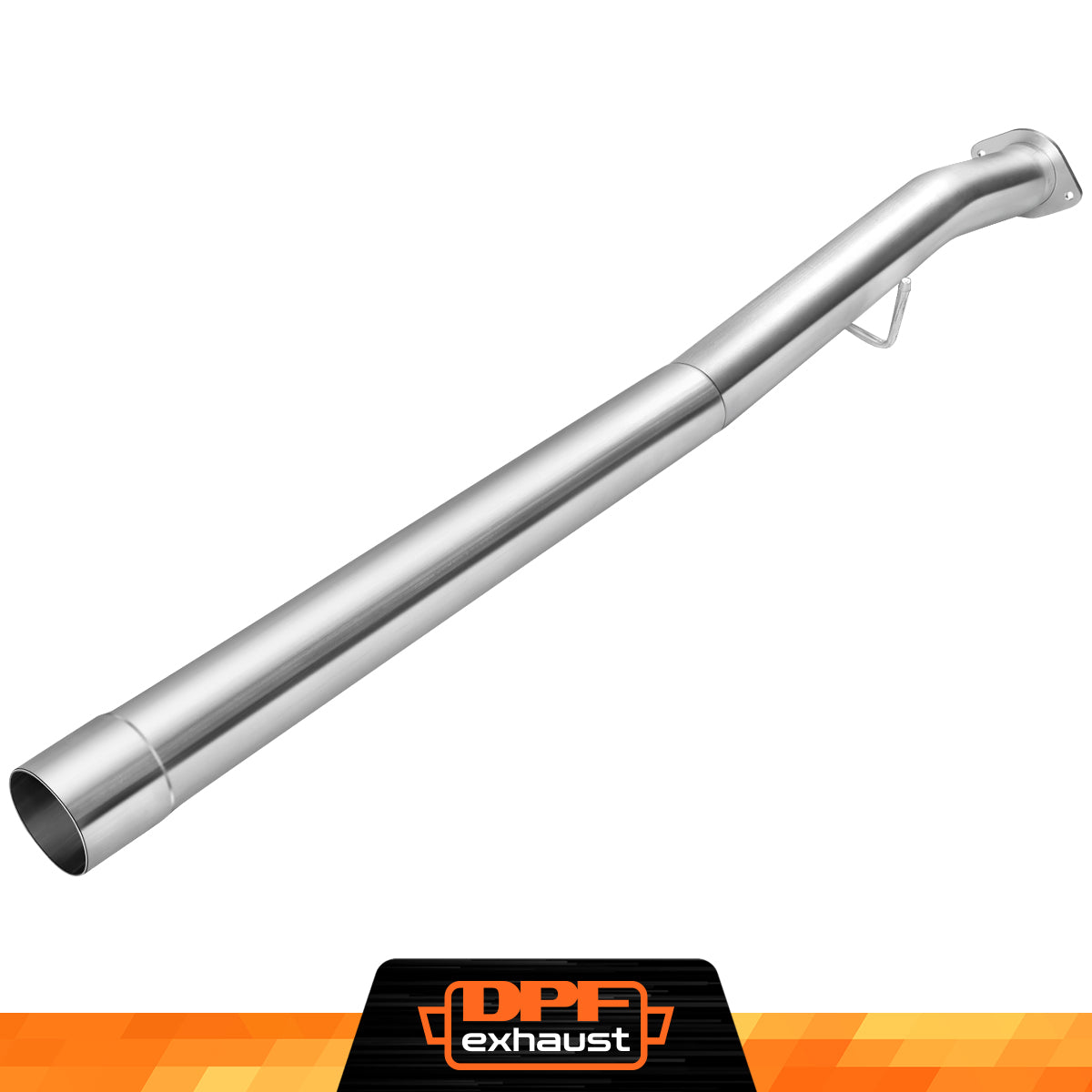
- Fabricated from heavy-duty T-409 stainless steel, all pipes have excellent corrosion resistance and high-temperature durability.
- Available in both 4-inch and 5-inch inlet diameter options
- Eliminates the restrictive factory DPF and catalytic converter assembly, reducing exhaust backpressure, gains roughly 4-5 MPG
- Offered in DPF Race (retains stock downpipe) and Downpipe-Back configurations
DPF/EGR Delete Kit for 2008-2010 Ford 6.4L Powerstroke
Ford F250 / F350 / F450 Super Duty 6.4L Powerstroke V8 Diesel
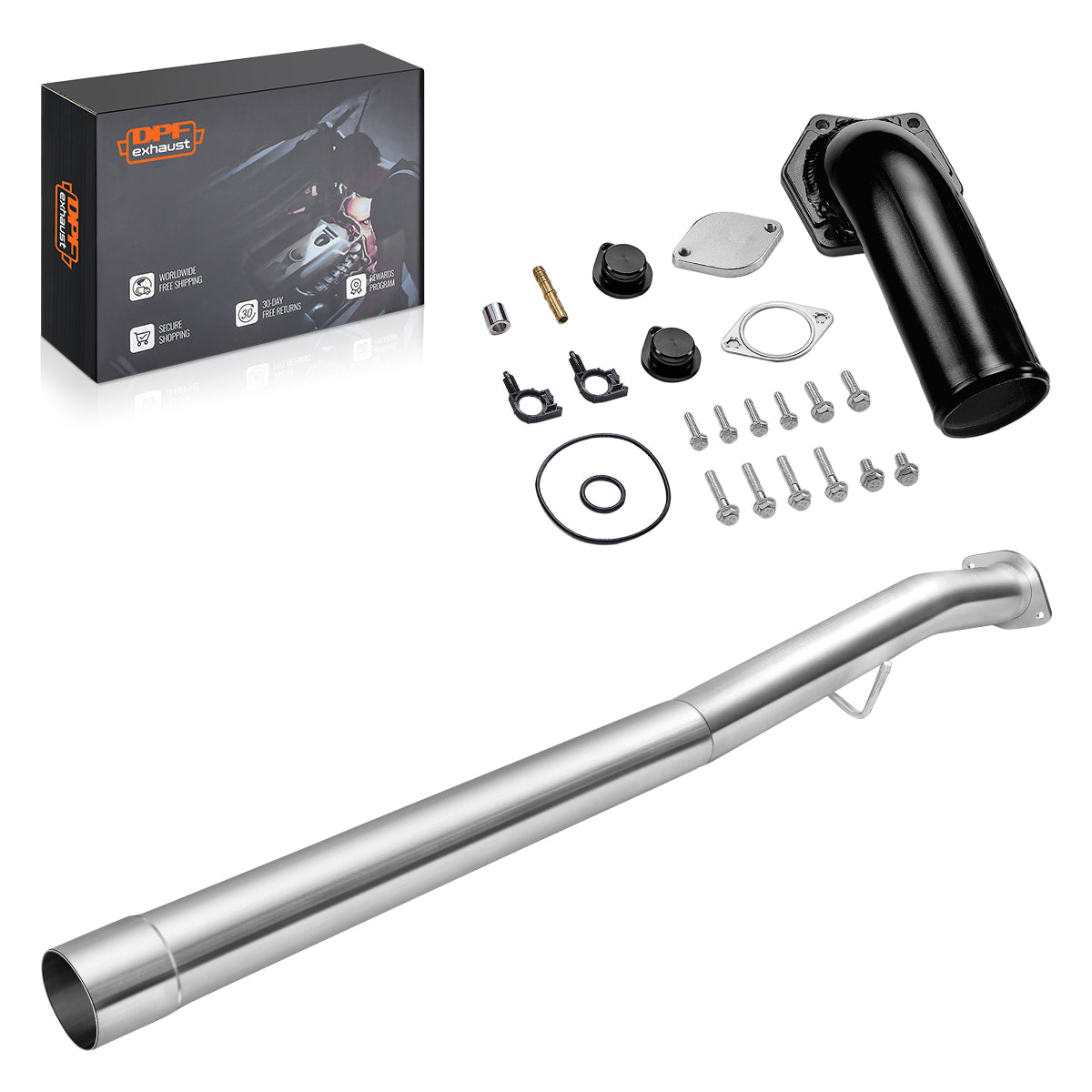
- Bundles EGR delete kit (with high-flow intake elbow) and T-409 stainless steel DPF delete exhaust together, removing both major emissions one-stop
- Delivers combined performance benefits including up to +50 HP potential gain (when paired with an appropriate tune), 2--5 MPG fuel economy improvement
- Selectable options include EGR kit color (black/red/silver) and pipe configuration (4-inch DPF Race, 4-inch Downpipe-Back, or 5-inch Downpipe-Back)
DPF/DEF/EGR All-in-One Delete Kit with Mini Maxx Tuner
Ford F250 / F350 / F450 Super Duty 6.4L Powerstroke V8 Diesel
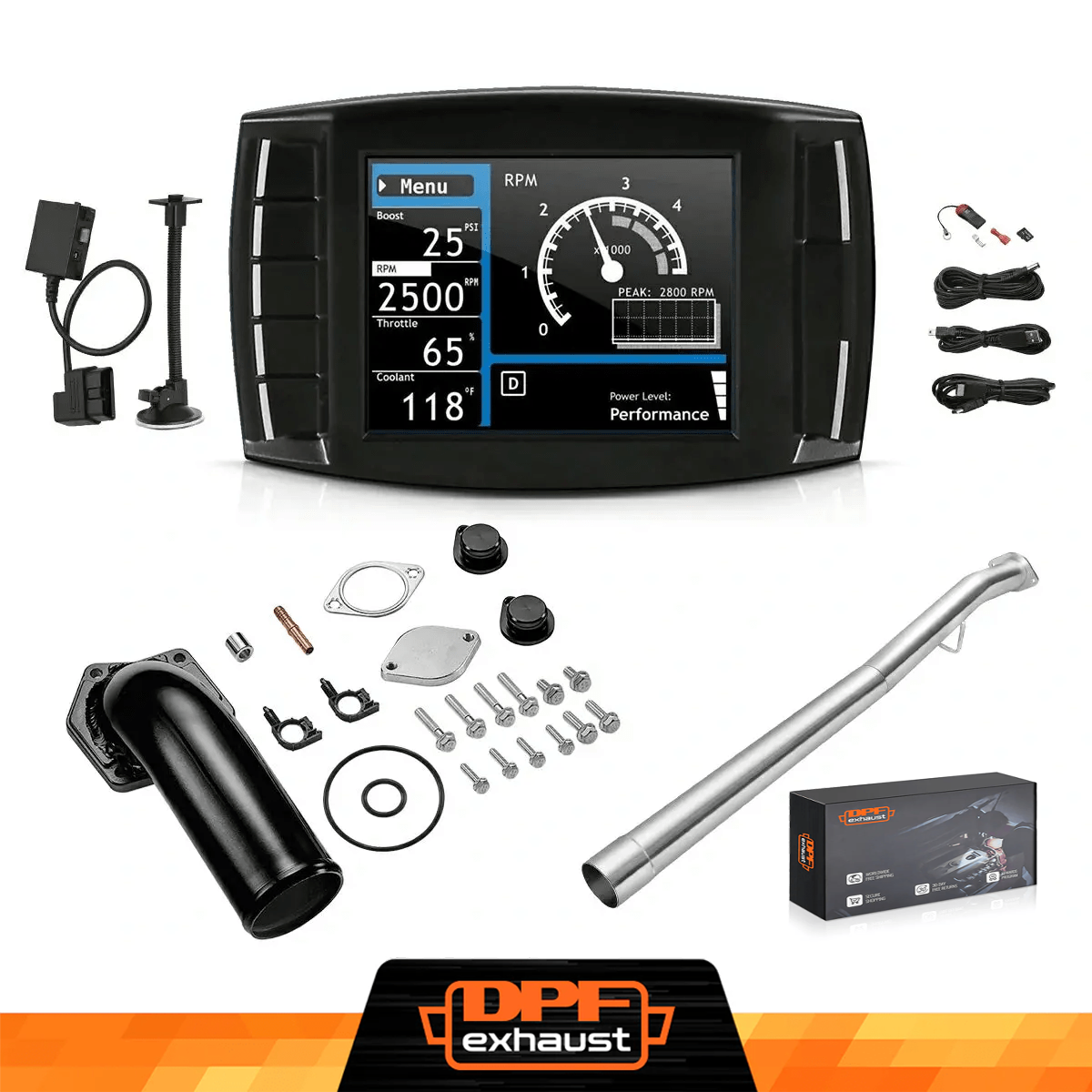
- Includes everything needed: EGR delete kit, DPF delete race pipe, and a Mini Maxx V2 tuner preloaded with calibration files tailored for the 6.4L platform
- Mini Maxx V2 provides adjustable power levels, DTC code management, real-time parameter monitoring, and the ability to switch tunes on the fly
DPF/DEF/EGR All-in-One Delete Kit with EZ Lynk AutoAgent
Ford F250 / F350 / F450 Super Duty 6.4L Powerstroke V8 Diesel
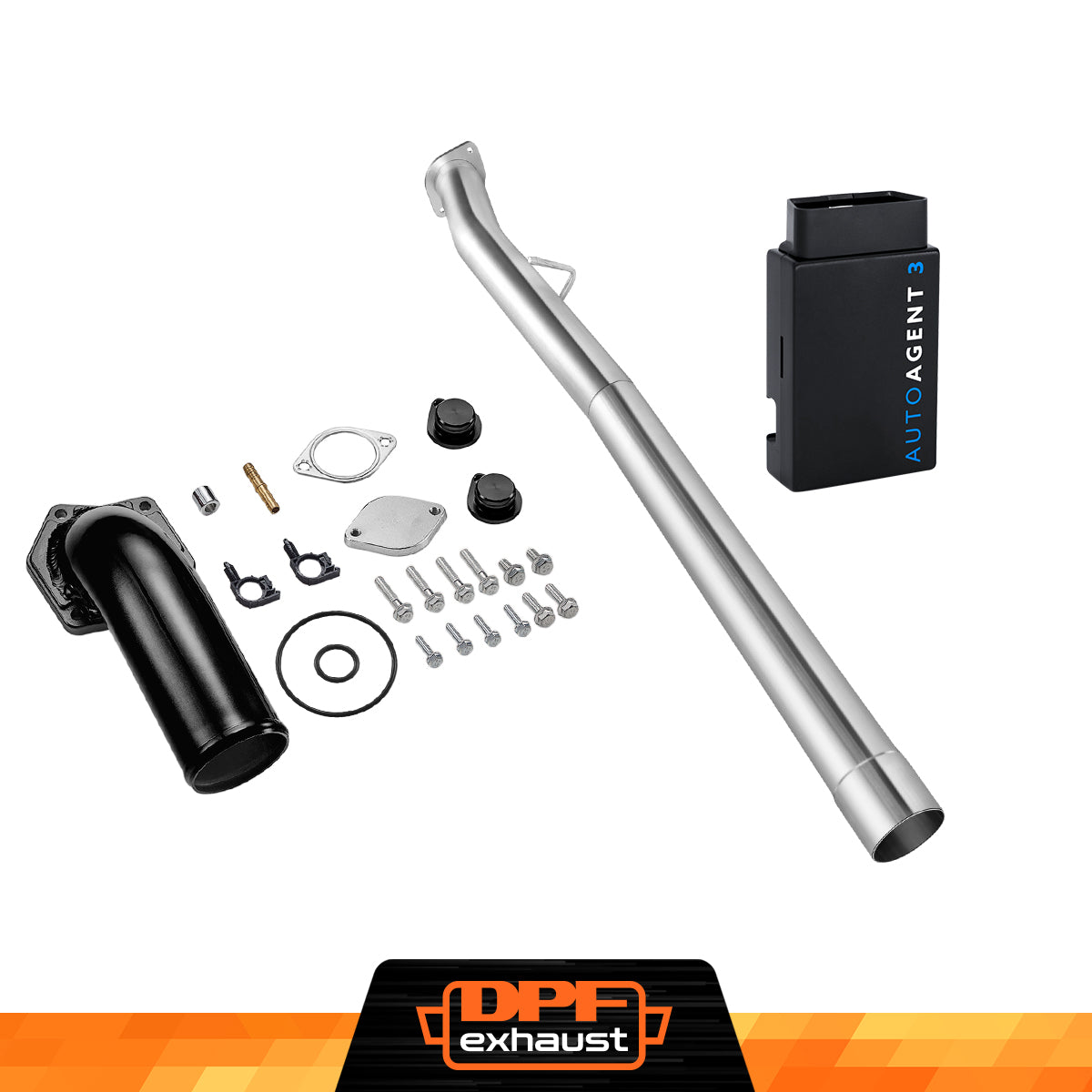
- Pairs EGR delete kit and DPF delete kit with EZ Lynk AutoAgent device and custom cloud-based tune files, offering remote tuning support, over-the-air updates, and live data logging capabilities through your smartphone (iOS 12+/Android 8+)
- EZ Lynk SOTF (Switch-On-The-Fly) option provides five selectable power levels , plus FMCSA-compliant ELD functionality for commercial operators who need electronic logging capability alongside their delete setup
- Sixty-second OBD2-port plug-and-play setup with no ECM removal required, backed by DPFexhaust's custom tune file support team for calibration adjustments -- note that custom tune files are non-refundable once generated, so verify fitment before ordering via service@dpfexhaust.com
All kits listed above require custom ECU tuning before driving to prevent check-engine lights, limp mode activation, and potential component damage from incorrect sensor expectations. For questions about tuner compatibility, fitment verification for your specific production date, or installation guidance, contact service@dpfexhaust.com before ordering -- the team typically responds within 24 hours.
Thank you for reading, and we wish you safe travels and a wonderful day! 🙂


